
Cannabis and Diabetes: Current Research for Florida Medical Cannabis Patients
Cannabis and diabetes research is evolving quickly, but the evidence is not simple. Here is what Florida medical cannabis patients should know about blood sugar, product formats, terpenes, safety, and current research.
Humulene: Appetite Suppression and Anti-Inflammatory Research
Humulene is an earthy, hoppy cannabis terpene being studied for appetite suppression and anti-inflammatory potential. Here’s what Florida medical cannabis patients should know before shopping by terpene profile.
Ocimene Terpene: Potential Effects and Medical Relevance
Ocimene is a lesser-known cannabis terpene with a sweet, herbal, citrusy aroma and growing research interest. Here’s what Florida medical cannabis patients should know about its potential effects, medical relevance, and how to shop terpene-aware.
Cannabis Use in Fibromyalgia Management
Fibromyalgia management is rarely about one solution. Here’s how medical cannabis may fit into a broader symptom-support plan, from balanced tinctures to targeted topicals.
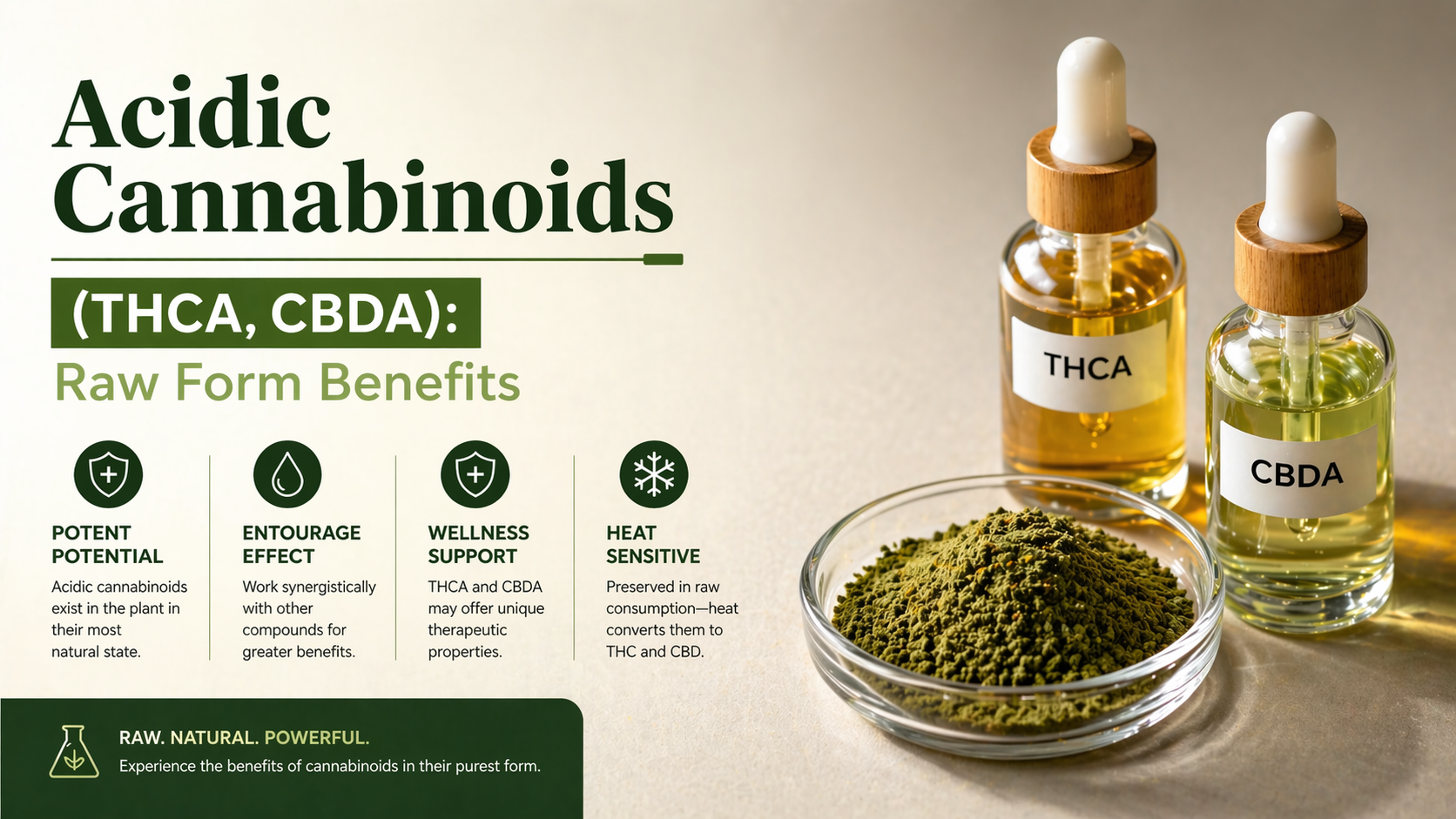
Acidic Cannabinoids (THCA, CBDA): Raw Form Benefits
If you have been paying closer attention to cannabis science lately, you have probably seen more conversation around acidic cannabinoids like THCA and CBDA. These are not trendy “new” compounds. They are the plant’s original forms. Cannabis naturally produces cannabinoid acids first, and those compounds convert over time or through heat into the better-known cannabinoids THC and CBD.
Cannabis Use and Cognitive Function: A Medical Review
Cannabis and cognitive function is more nuanced than “good” or “bad.” This medical review breaks down THC, CBD, cannabis terpenes, dose, and smarter shopping for Florida patients.
Understanding Bioavailability in Cannabis Medicine
If you’ve ever wondered why a vape works in minutes while a chew takes longer and lasts longer, bioavailability is the reason. This guide breaks down how delivery method changes the medical cannabis experience and how to shop smarter.
Cannabis and Neuroprotection: Emerging Research
Cannabis and neuroprotection is one of the most talked-about areas in medical cannabis research, but the science is still evolving. Here’s what Florida patients should know about cannabinoids, neurological research, and choosing practical product formats without overhyping the evidence.
Cannabis and Gastrointestinal Conditions: What Florida Patients Should Know
Cannabis may play a supportive role for some gastrointestinal symptoms, but it is not a cure-all. Here is what Florida patients should know about nausea, appetite, IBS, IBD, dosing, risks, and current Green Dragon product formats.
Cannabis and Immune System Modulation: What Florida Patients Should Know
Cannabis is better understood as an immune modulator than an immune booster. Here’s what Florida patients should know about inflammation, cannabinoids, dosing formats, and practical Green Dragon product picks.
Terpene Ratios vs THC Percentage: What Matters More?
THC tells you how strong a product may feel. Terpenes help explain how it may feel. Here’s how Florida medical cannabis patients can use both to shop smarter.
Cannabis and Migraine Treatment: What the Evidence Actually Says
What does the research actually say about cannabis and migraine treatment? This guide breaks down the evidence, THC vs. CBD, terpene questions, product formats, and practical tips for Florida medical cannabis patients.

Cannabis for Muscle Spasticity: Clinical Applications
Cannabis for muscle spasticity is best understood as part of a broader symptom-management plan. Explore clinical applications, cannabis terpenes, storage and stability, and Florida product formats from Green Dragon.
Why Lab Reports Matter for Medical Cannabis Patients
Lab reports help medical cannabis patients verify potency, review safety testing, and make more informed choices about the products they use.
Microdosing in Medical Cannabis Treatment
Microdosing in medical cannabis treatment is exactly what it sounds like: using a very small amount of cannabinoids, usually THC or a balanced THC:CBD product, to support a treatment goal without pushing into an overwhelming experience. Think less “check out for the evening” and more “dial the volume down a notch.”
For Florida medical cannabis patients, that approach can make a lot of sense. Not every symptom calls for a heavy dose. Sometimes the goal is simply to take the edge off, settle into a calmer baseline, or build a more predictable routine around pain, stress, appetite, rest, or daily discomfort. In those moments, less can genuinely be more.

High-THC Products: Appropriate Medical Use Cases
High-THC cannabis is not automatically better. This guide explains when potent products may be appropriate for medical use, which formats fit different goals, and how Florida patients can shop smarter.
Low-THC Medical Cannabis: When Less Is More
For a lot of patients, medical cannabis does not have to mean the strongest possible product or the highest THC percentage on the shelf. Sometimes the better fit is gentler, steadier, and easier to live with. A low-THC approach can help patients stay more comfortable, more functional, and more in control of their experience.
That is the real value behind the phrase “less is more.” It does not mean cannabis is weak or ineffective. It means the best result may come from using the smallest amount that supports your goal. For some patients, that can mean less grogginess, less anxiety, less trial and error, and a better chance of building a sustainable routine.
Medical Cannabis and Mental Health Monitoring: A Smarter Way to Track Your Experience
Medical cannabis and mental health monitoring is less about chasing a feeling and more about tracking patterns. Here is how Florida patients can log dose, timing, mood, sleep, and next-day effects more effectively.
Cannabis and Chronic Illness Management: What Florida Patients Should Know
Chronic illness care is rarely about one symptom. This guide explains how cannabis may fit into a broader management plan, what the evidence actually says, and which Florida product formats are worth a closer look.
Cannabis and Liver Metabolism (CYP450) Explained
In plain English, CYP450 is a family of enzymes that helps your body process many drugs. A useful comparison is grapefruit: the FDA explains that grapefruit can block intestinal CYP3A4, which can let more of certain oral medications enter the bloodstream and stay there longer. That is why some labels warn patients to avoid grapefruit. Cannabis is not grapefruit, but the analogy helps: if a product changes the enzymes or transporters involved in drug handling, blood levels can shift up or down.